
You have had your fat freezing session, the numbness has worn off, and now the hardest part begins: the wait. Cryolipolysis is one of the few aesthetic treatments where almost nothing seems to happen at first, and then, weeks later, your clothes quietly start fitting differently. Knowing what to expect — and when — is the difference between anxiously checking the mirror every morning and calmly tracking a change that unfolds over months. Here is an honest, evidence-based guide to fat freezing results: how much fat you can realistically lose, the week-by-week timeline, and how to record your journey so you actually notice the improvement.
Contouring, not weight loss: what “results” really means
Before the timeline, one expectation has to be set straight, because it shapes everything else. Fat freezing is a body-contouring treatment, not a weight-loss treatment. It works by cooling and destroying a portion of the fat cells in a specific, pinchable pocket — the diet-resistant kind that lingers on the abdomen, flanks or under the chin even when the rest of you is close to target. It cannot touch the deeper visceral fat around your organs, and it will not lower the number on your scales in any meaningful way.
What it can do is measurable and worthwhile. Across published clinical studies, a single session typically delivers an average 20–25% reduction in the thickness of the treated fat layer, with some abdominal trials reporting reductions of up to around 32%. That is a real, visible change in a stubborn area — just not one you will read on a set of bathroom scales. If you want to understand the science of how the cold actually destroys those fat cells, our guide to how fat freezing works explains the mechanism in full.
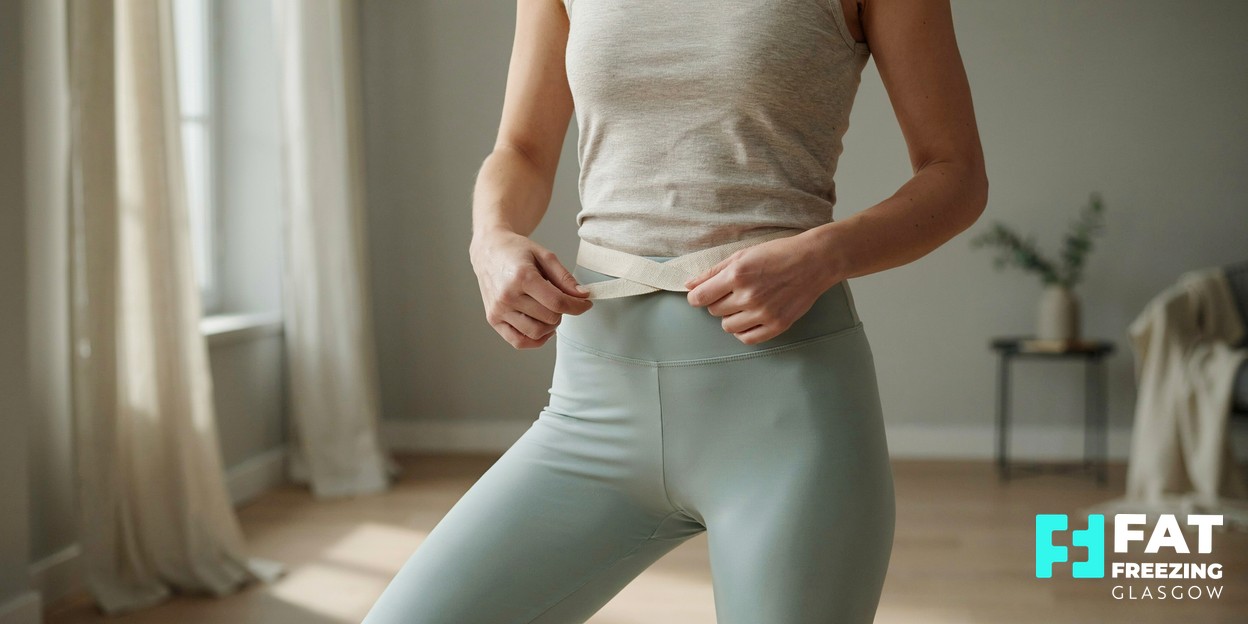
The fat freezing results timeline
Patience is the price of admission with cryolipolysis. Your body has to clear the destroyed fat cells through its lymphatic system, and that biological process simply takes time. Here is roughly how it unfolds for most people:
| Timeframe | What you can expect |
|---|---|
| Same day | Redness, swelling, firmness and numbness in the treated area — no visible fat change |
| Week 1–2 | Sensory fluctuations such as numbness and tingling as inflammation settles; still no visible change |
| Week 3–4 | First subtle signs — clothes may start to fit a little differently |
| Week 6–8 | Visible contour improvement; the “sweet spot” and a standard two-month check-in point |
| Week 8–12 | The full result becomes apparent for most people |
| Month 4+ | Biological clearance complete; the final result is fully established |
The early days can feel underwhelming, and that is normal — the swelling and numbness are part of the process, not a sign it has failed. (Our article on fat freezing side effects and safety covers exactly what is and is not expected in that first fortnight.) Interestingly, results can arrive a little sooner than the textbook suggests: one 2025 clinical trial found that 71.7% of participants reported a noticeable improvement at just four weeks. Even so, three to four months remains the honest window for judging your final outcome.
How much fat can you realistically lose?
The headline figure worth holding onto is that 20–25% reduction per treated area, per session. It is significant, but it is a percentage of one fat pocket, not a dress size promised across your whole body.
If a single session does not fully achieve the contour you are after, a treated area can be re-frozen. Multiple sessions on the same spot can build a cumulative reduction of around 40–50%. In practice, the number of sessions comes down to the area:
- Small pockets — a double chin, a minor love handle — often respond well to a single session.
- Larger areas — the abdomen, the thighs — typically need two to three sessions to reach their potential.
That said, many people are perfectly happy after one. In a large real-world review of over 3,000 patients and more than 18,000 treatment cycles, the median number of sessions per patient was just one. When repeat sessions are needed on the same area, they are spaced at least a month apart, with six to eight weeks commonly recommended to let the first round of clearance finish.
Who sees the best results?
Fat freezing rewards the right candidate more than any clever technique can. The people who are consistently delighted tend to share a specific profile:
- A BMI of 30 or under, and within roughly 10–30 lbs of their goal weight
- Pinchable, subcutaneous fat in the target area — the kind you can grab between finger and thumb
- A stable weight, rather than being in the middle of significant weight loss or gain
- No cold-sensitive medical conditions
- Realistic expectations — understanding this is refinement, not transformation
The treatment is versatile in where it can be applied: nine distinct body areas are cleared for treatment, including the abdomen, flanks and love handles, inner and outer thighs, the double-chin and submandibular area, upper arms, back fat, the bra line and the “banana roll” below the buttocks. But the closer you sit to that ideal-candidate profile, the more likely your results are to land at the upper end of the range.
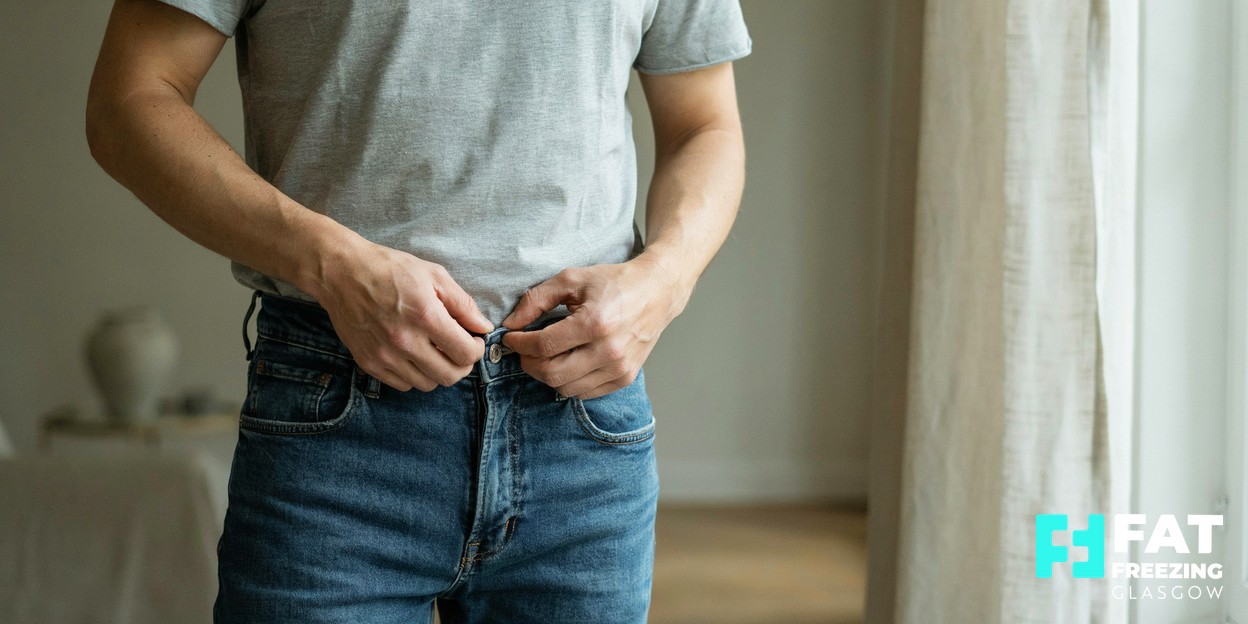
Recording your journey (why the scale lies)
Here is a genuine, well-documented quirk of cryolipolysis: without a proper record, people routinely underestimate their own results. The change is so gradual, and you see yourself every day, that a real improvement can hide in plain sight. Structured documentation is not vanity — it is the only reliable way to see what has actually happened.
The gold-standard approach a good clinic will use, and that you can mirror at home, has three parts:
- Standardised photography. Take before photos at your consultation and on the day of treatment, then repeat them at each milestone. Keep everything constant: a fixed distance of around 1.5–2 metres, the same diffuse lighting, a plain neutral background, the same time of day, identical clothing, and the same posture and angles (front, both sides, and 45-degree oblique views). Consistency is what makes a comparison honest.
- Measurement tracking. A tape measure taken at the same landmark with consistent tension — at baseline, four, eight and twelve weeks — is more telling than any photo. Calliper skinfold readings at baseline and twelve weeks, and simply noting how a reference pair of jeans fits, round out the picture.
- Milestone check-ins. Follow up at four weeks (changes are often subtle), eight weeks (the primary result is becoming clear — usually the most meaningful comparison), and twelve weeks (the definitive result). Some people see continued slow improvement out to six months.
The single biggest factor in a positive fat freezing experience is not the machine — it is the quality of the consultation that sets your expectations and plans how you will measure success.
And do not weigh yourself as a measure of success. Fat freezing does not reliably change your weight, so the scale number often stays put even when your body composition has genuinely shifted. Judge the result by your photos, your measurements and how your clothes fit — never by weight.
Managing your expectations
An honest article has to include the caveats. Fat freezing is effective, but it is not magic, and roughly one in five people see a less dramatic result than average, influenced by their individual biology, tissue thickness and how well the applicator covered the area. Full results also demand genuine patience: three months is the minimum before you can fairly assess the outcome.
Set against the right expectations, though, most people are satisfied — patient-satisfaction rates across published trials run from around 73% to 89%. The people who feel let down are almost always those who expected weight loss, or who judged the treatment at four weeks instead of twelve.
Ready to find out what’s realistic for you?
The most useful thing you can do is have a proper conversation about your specific area, your goals and whether your fat is the pinchable kind that responds. At our Glasgow clinic, serving clients across Scotland, a consultation is where we set honest expectations, plan how many sessions you may need, and agree how we will measure your progress together.
If you would like to know what fat freezing could realistically achieve for you, book a fat freezing consultation and we will talk it through — no pressure, just a candid assessment of whether it is the right fit.
Pros & Cons
Pros
- Clinical studies typically show a 20–25% reduction in the treated fat layer per session — a genuine, measurable change in stubborn, pinchable pockets
- No downtime: you can return to normal life straight away while the result develops quietly over the following weeks and months
- Once fat cells are cleared by the body they do not come back, so a stable weight can keep the result looking good long-term
Cons
- It is body contouring, not weight loss — the scales often barely move, and it will not help if you are well above your target weight
- Results are gradual and require patience, taking a full three to four months to appear, and around one in five people see a more modest change than average
- Larger areas often need two to three sessions, spaced several weeks apart, to reach their full potential
Frequently Asked Questions
How much fat will I actually lose?
Most clinical evidence points to an average 20–25% reduction in the thickness of the treated fat layer from a single session, with some abdominal studies reporting up to around 32%. Treating the same area more than once can build a cumulative reduction of roughly 40–50%. Crucially, this is a change in a localised fat pocket, not overall weight — fat freezing is a contouring treatment, so the number on your scales may barely move even when your shape has clearly changed.
When will I see the results?
Nothing much changes in the first fortnight beyond swelling and numbness. The first subtle signs — clothes fitting a little differently — tend to appear at three to four weeks, meaningful visible change arrives around six to eight weeks, and the full result becomes apparent for most people between eight and twelve weeks. One 2025 trial found nearly 72% of participants noticed an improvement as early as four weeks, though three to four months remains the honest window for a final verdict.
Why hasn't my weight changed at all?
That is completely normal and expected. Fat freezing does not reliably produce weight loss — it destroys a modest percentage of fat cells in one small area, which rarely registers on the scales. The right way to judge your result is by how your clothes fit, by tape and calliper measurements of the treated area, and by standardised photos, never by weight.
How many sessions will I need?
It depends on the area. Small pockets such as a double chin or minor love handles often respond well to a single session, while larger areas like the abdomen or thighs usually need two to three. In one large real-world review of over 3,000 patients the median was just one session per person. Sessions on the same area are spaced at least a month apart, with six to eight weeks commonly recommended.
How can I be sure it is actually working?
Document it properly. Because results build so slowly, people consistently underestimate their own improvement without a record to compare against. Standardised before photos, tape-measure circumference readings, and check-ins at four, eight and twelve weeks are the gold standard — clinics use the twelve-week point as the definitive measure of a final result.